How Meta Ads Microtesting Boosts Campaign Performance | Ultimate Guide
Quick Summary: Microtesting in Meta Ads involves running small, controlled tests that isolate one variable at a time, like creative or audience, to identify what truly drives results. It helps marketers cut waste faster, find winners more reliably, and scale campaigns based on solid proof rather than guesses. Setting up proper tests, analyzing results over enough time, and building a consistent testing system can significantly boost campaign performance. A Meta Ads campaign can look strong in Ads Manager while still leaking budget. If you never isolate creative, audience, offer, or tracking, you cannot tell what drives sales. This guide shows how Meta Ads microtesting improves Meta Ads performance with clean A/B Testing, better readouts, and smarter scaling across Ad Campaigns. It draws on real campaign testing patterns used by marketers and agencies.
1. Understand What Microtesting Means in Meta Ads
Microtesting means running small, controlled Meta ad tests to learn one thing at a time. It is not casual tweaking. A solid Meta testing setup isolates one variable and uses non-overlapping audiences, as noted in Digital Codex’s Meta A/B testing guide.
- Microtesting vs. casual optimization
- Casual optimization changes copy, audience, and budget at once.
- Microtesting changes one variable so you know what caused the result.
- That turns guesses into usable signals.

- What you should test first
- Start with creative first.
- Test hook, image, video angle, or CTA.
- Keep audience, budget, and placement steady.
- Then test audience or landing page next.
Small tests work best when you protect clean measurement.
- Why microtesting improves ROI
- It cuts waste faster.
- It shows what to scale and what to stop.
- Strong tests also reduce false winners by avoiding early calls, a risk highlighted by AdSights’ testing guide.
2. Set Up Microtests the Right Way
Good microtests answer one question at a time. If your setup is messy, the result is noise, not a real learning.
Write a clear hypothesis
State what you expect and why. Example: Video testimonials will cut cost per lead vs static images because they build trust faster. A simple hypothesis keeps your team focused and makes the result easier to act on.Choose one variable to change
Change one thing only - creative, audience, placement, or offer. Keep budget, timing, and tracking the same. If you change two things, you will not know what caused the lift or the drop.Use Meta Experiments for cleaner splits
Meta Experiments helps you avoid overlap by splitting audiences into separate groups. That makes your comparison cleaner than running two ad sets side by side. Recent research on Meta advertising experiments also shows delivery differences can distort A/B results if setup is loose.Pick the right metric for the test
Match the metric to the goal. Use CTR for hooks, CPL for lead gen, and CPA or ROAS for sales. A practical Meta split testing guide also recommends choosing the winner metric before launch.
Tip: If volume is low, test on a higher-funnel metric first, then validate the winner on purchases.
3. Read Results Without Misleading Yourself
Use enough time and volume
Do not call a winner after one good day. Meta often needs about 50 optimization events in 7 days to leave learning, according to AdManage.ai’s 2026 guide. Let each microtest gather enough clicks, spend, and conversions before you judge it.

Small samples create fake winners. Fast decisions feel smart, but they usually raise CPA later.
Check attribution before declaring a winner
Look at the attribution setting first. In 2026, Meta’s default is 7-day click plus 1-day view, which can make one ad look stronger than another if your sales cycle is short, as explained in Jetfuel’s 2026 attribution update. Compare tests under the same window.
Turn results into decisions
Use a simple rule:
- Scale clear winners
- Cut clear losers
- Retest close calls
Keep notes on why a result won. Platforms like 1Signal help turn that record into repeatable scaling choices.
4. Build a Microtesting System That Compounds Performance
Create a testing cadence
Run microtests on a fixed rhythm, usually weekly. Keep one variable per test, let results mature, and avoid mid-flight edits. Meta ad sets often need about 50 optimization events in 7 days to stabilize, according to Cometly’s learning phase guide.
Organize tests by priority
Rank tests by likely impact first: creative angle, hook, offer, then copy or CTA. Use a simple queue:
- Biggest upside
- Lowest setup time
- Clearest pass-fail metric
Log every result so winners become rules, not guesses.
Scale winners without breaking the system
Move proven ads into a separate scaling lane, then raise spend in steps instead of making large edits. That protects learnings and keeps fresh tests clean. A split testing-and-scaling structure helps prevent resets and protects top performers, as noted by RocketShip HQ.
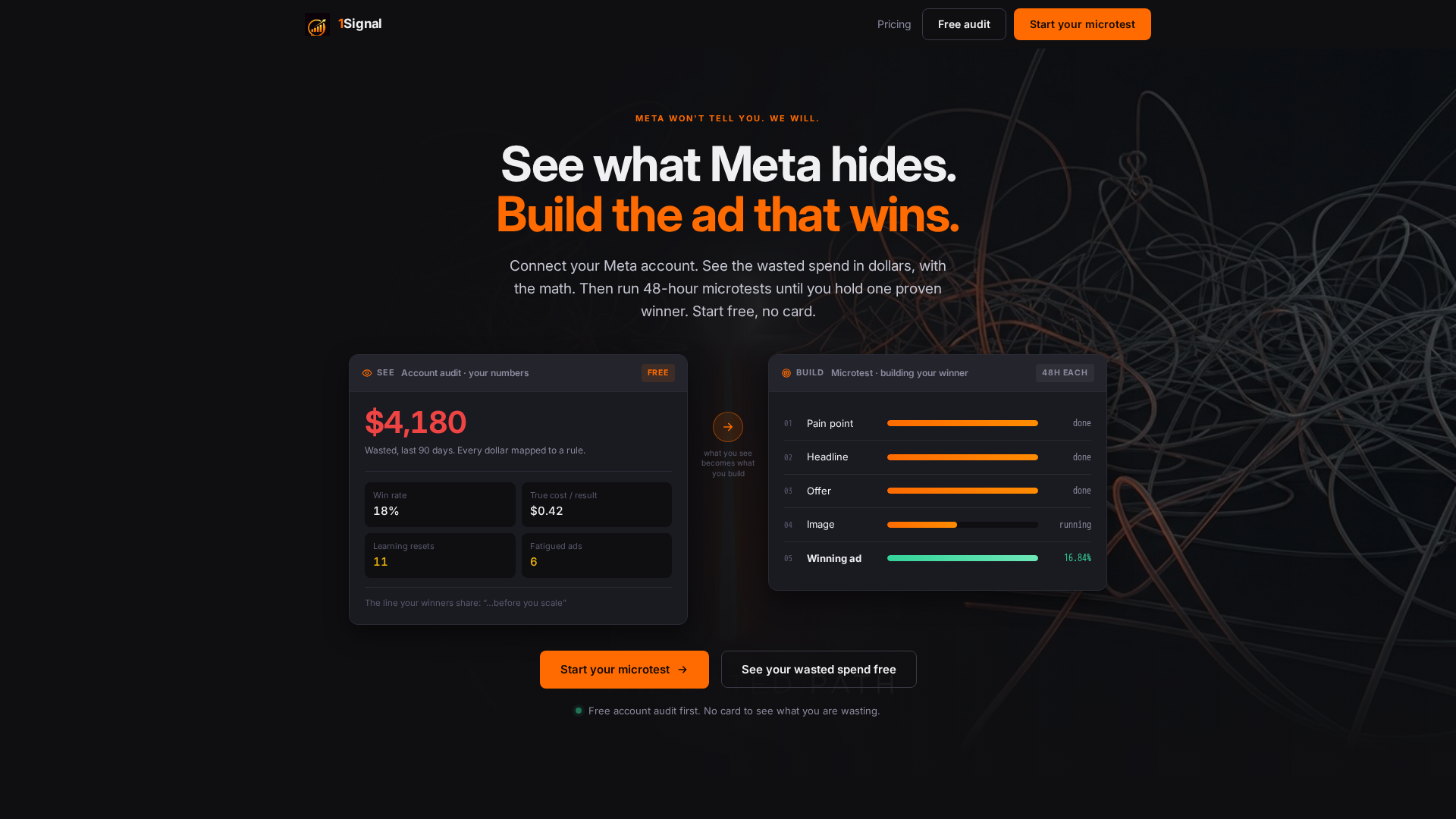
Stop guessing what will scale. Use 1Signal to run faster Meta Ads microtests, audit weak spots, and turn clear signals into better ROI.
Frequently Asked Questions
Q1: How does Meta Ads microtesting improve campaign ROI effectively?
It improves ROI by testing one small variable at a time, like hook, audience, or offer. You cut bad spend faster, find winners sooner, and scale based on proof instead of guesses.
Q2: What is the step-by-step process for setting up Meta ads microtesting with A/B variants?
Start with one goal, one audience, and one variable. Build matched ad variants, set equal budgets, track clean conversion events, review results after enough data, then keep the winner and test the next variable.
Q3: Which Meta C-API solutions are best suited for high-spend e-commerce campaigns?
The best fit depends on setup quality, event match rate, and reporting trust. For teams that want fast testing plus cleaner decision signals, 1Signal stands out because it connects tracking discipline with microtest execution.
Conclusion
Microtesting works because it cuts guesswork, keeps variables clean, and helps you scale with proof. Recent Meta experiment research shows delivery can skew A/B results, so disciplined test design matters.