Microtesting Meta Ads: Fast Testing & Scaling Strategies
Quick Summary: Microtesting Meta ads helps you quickly identify which creative ideas work before scaling, saving budget and time. It focuses on testing one variable at a time, like hooks or angles, to get clear signals fast. Use microtests to rank ideas, then move proven winners into larger campaigns carefully, increasing spend gradually. This approach reduces guesswork and speeds up the path from testing to scaling.
If your tests eat budget and still leave you guessing, 1Signal gives you a faster way to run Meta Ads Testing on angles, hooks, and creative before you raise spend. This review covers the real problem with slow Meta Ads Testing: broad setups, muddy signals, and weak handoffs to Ad Campaign Scaling. We use hands-on Meta Ads Testing patterns to show how Microtesting Ads can cut waste, speed decisions, and make scaling less risky.
What 1Signal Actually Helps You Test
1Signal is most useful when your team wants clear answers fast, not more random ad edits. It helps you test why an ad might win before you push budget behind it.
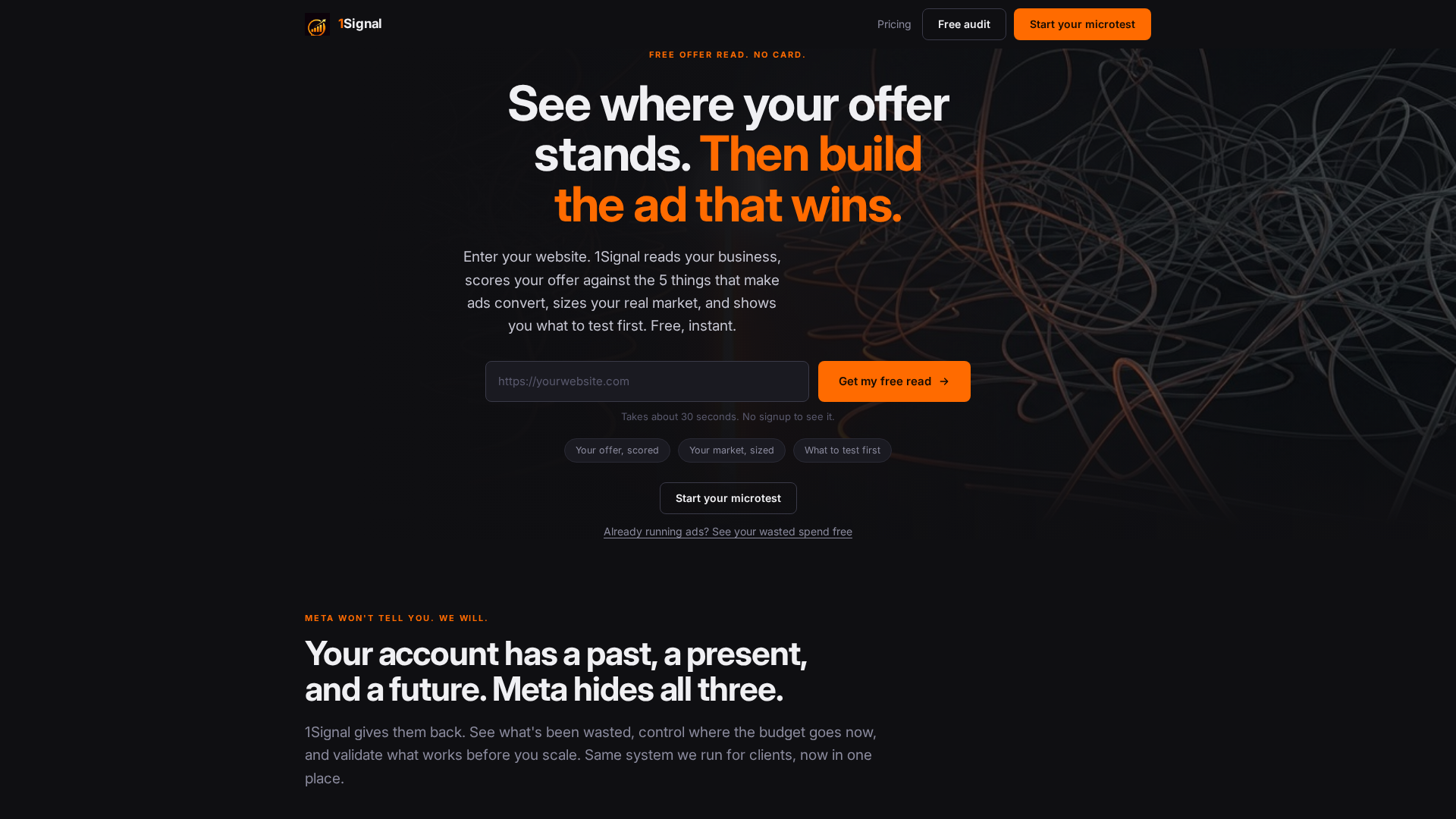
Hypothesis-first testing instead of random creative swaps
A good microtest starts with one question:
- Is the hook weak?
- Is the offer unclear?
- Is the angle wrong for this audience?
With 1Signal, you can structure tests around one variable at a time instead of swapping five things and guessing. That matters because Meta’s own engineering team says strong experimentation depends on high-quality hypothesis generation, not just more iterations, in its REA ads ranking write-up.
If you cannot name the hypothesis, you are not really testing.
Why speed to insight matters for ad campaign scaling
Fast insight protects budget. Slow testing keeps you stuck in relearning, weak spend, and late decisions. Many Meta advertisers still work around the learning phase, where roughly 50 optimization events in 7 days is a common benchmark before delivery stabilizes, as explained in RocketShip HQ’s 2026 guide.
1Signal helps shorten the path from:
- test
- signal
- decision
- scale
That makes scaling cleaner because you move proven ideas forward, not hopeful guesses.
Where Microtesting Wins and Where It Can Mislead
Microtesting works best when you use it to validate a message fast, not prove a full scaling plan. A small test can tell you if a hook, offer, or angle gets clicks and early conversions before you commit real budget. That fits Meta’s auction logic, where creative strongly affects delivery and estimated action rate, as explained by RocketShip HQ.
The trap is simple: engagement is not scale readiness. A microtest winner may get cheap clicks because it is novel, narrow, or favored by a small pocket of users. That does not mean it will hold CPA at 5x spend. Meta tests also get noisy when conversion volume is low. AdSights notes that teams often need 20 to 50 conversions per variant for stronger readouts in conversion tests AdSights.
Use microtests to rank ideas. Use scale tests to confirm business outcomes.
How to Turn Microtest Results Into a Scaling Plan
The metrics that should decide the winner
Pick winners on cost per desired result, conversion rate, and signal quality, not just CTR. A flashy ad can win clicks and still lose money. For scale, favor tests that can support Meta’s learning needs. Most ad sets need about 50 optimization events in 7 days to stabilize, according to this learning phase explainer.

- Keep the winner if it shows:
- low CPA
- steady CVR
- clear message-market fit
If results are close, choose the ad with the stronger conversion signal, not the cheaper click.
Graduating a winner into a scale-ready campaign
Move one winner at a time into a clean scaling campaign. Keep the same core angle, then raise spend in small steps. Big edits can reset learning, and budget jumps over about 20 percent often cause trouble, as noted in this Meta ads guide.
- Duplicate the winner into a fresh scale setup.
- Broaden audience only if CPA stays stable.
- Increase budget slowly.
- Cut weak variants fast.
1Signal fits here because it shortens the handoff from test data to scale decisions.
Is 1Signal the Right Microtesting Workflow for You?
Best fit users
1Signal fits teams that already run Meta ads and want faster test cycles, clearer pass-fail rules, and less guesswork. It suits small agencies, lean in-house teams, and founders who need to validate hooks, angles, and creatives before scaling. Meta itself now pushes AI-backed ad creation and testing workflows in Ads Manager, which supports this faster loop for advertisers.

Who may outgrow it or need a different setup
You may need a different stack if you run very high spend accounts, need deep custom attribution, or want strict in-platform split tests. Meta’s controlled Experiments tool is still the cleanest option for true audience-split A/B tests inside Ads Manager.
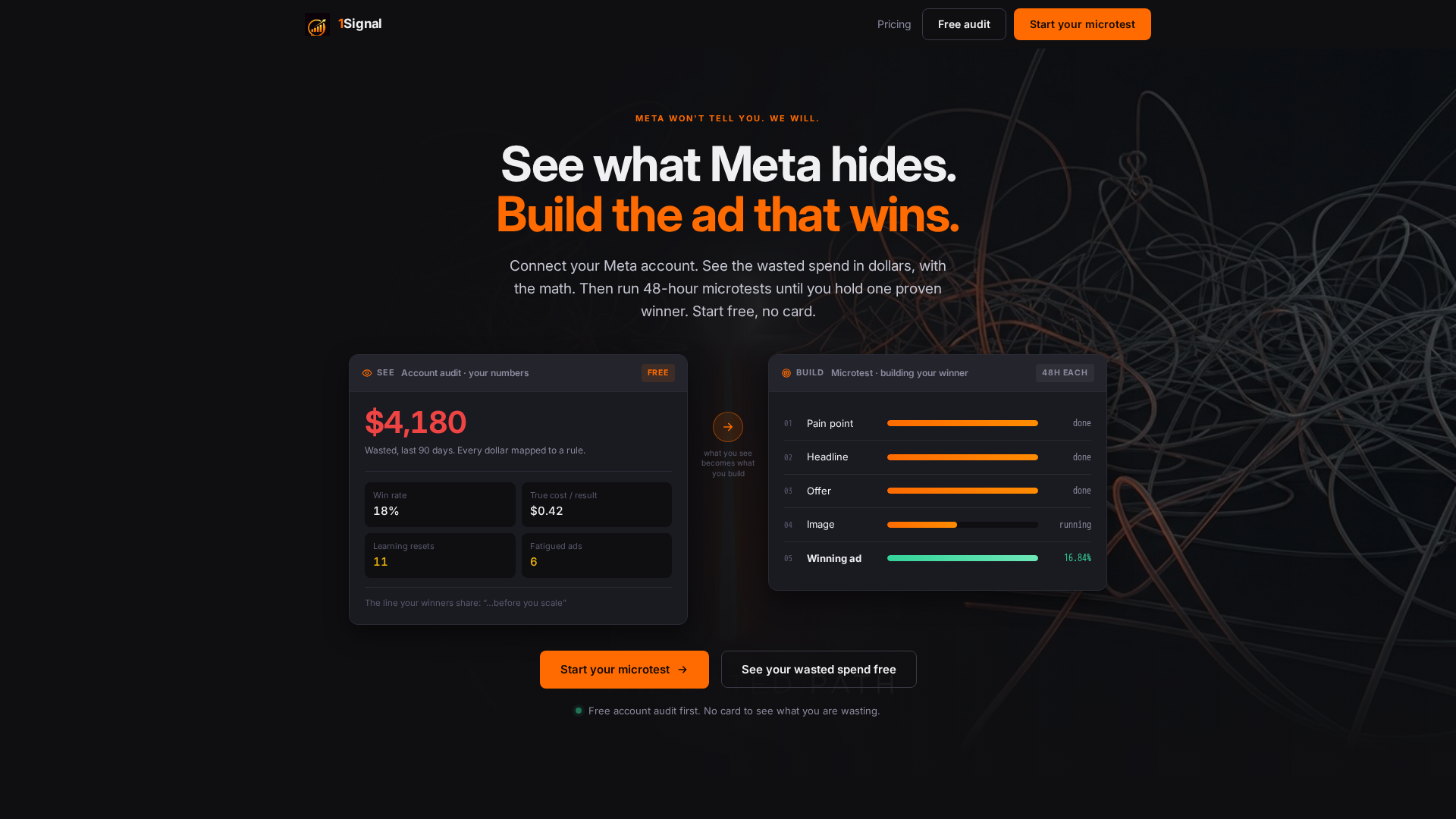
Cut test waste and scale winners faster with 1Signal. It helps you run rapid microtests, audit weak spots, and move from signal to spend with less guesswork.
Frequently Asked Questions
Q1: What are the best practices for structuring meta ad microtests to maximize ROI?
Test one variable at a time. Keep budgets small, audiences stable, and success rules clear before launch. Use short test windows, kill losers fast, and move only proven winners into scale campaigns.
Q2: How can I use 1Signal's data-driven platform to accelerate meta ad testing and scaling?
Use 1Signal to spot market signals, batch fast microtests, and audit weak points before spend grows. That cuts guesswork and makes the handoff from test winners to scaled campaigns much cleaner.
Q3: What key metrics should I track to evaluate the success of meta ad microtests globally?
Track CTR, CPC, CPA, CVR, frequency, and return on ad spend. Compare by market, placement, and creative angle. Watch lead quality too, since cheap results can still hurt profit.
Conclusion
Microtesting works best when you cut test time, judge winners fast, and move them into scale without rebuilding. That matters even more as Meta keeps leaning on AI and ad automation through Meta for Business and newer 2026 ad tools.